
From the cracked topsoil of Kansas to the glass-walled boardrooms of Boston, the same variable is rewriting price tags: water, or the absence of it. The U.S. Drought Monitor puts 42 % of the Lower 48 in some stage of drought this June, the highest mid-year reading since 2013. That single data point is now propagating through balance sheets faster than any earnings revision. Farmland values tracked by the Federal Reserve Bank of Kansas City rose 9.8 % year-on-year in the first quarter, doubling the 4.7 % pace of the S&P 500. REITs that warehouse row-crop acreage—Gladstone Land, Farmland Partners—trade at record 1.45× net asset value, a 35 % premium to their five-year mean. Equity analysts call it “climate multiple expansion”; portfolio managers call it an inflation hedge; the Environmental Protection Agency calls it a warning sign that non-climate sectors are mispricing water risk.
Water Becomes an ESG Asset Class
The E in ESG is no longer confined to carbon. Water-use intensity, measured in liters per dollar of EBITDA, is now a line item in MSCI’s latest model updates. The agency calculates that every 10 % reduction in irrigation volume translates into a 0.3-notch upgrade in its “Natural Capital” pillar, a score that already correlates 0.62 with forward P/E among consumer-staples names. Nestlé’s $1.9 bn reforestation-linked loan last month priced 7.5 bp inside its conventional credit facility after the company committed to a 15 % water-draw cut by 2026. Bankers say similar structures are being drafted for Bunge and Archer-Daniels-Midland, tying margin grids to evapotranspiration data streamed from NASA satellites. Reuters reports that syndicated loans with water KPIs have tripled since 2021, yet U.S. equity analysts still bury the metric in footnotes. The inference: a valuation spread is opening inside the same sector, and only one side sees it.
From Soil to REITs: Capital Circulates in Closed Loops
Farmland REITs are the fastest conduit for drought risk to reach public-market pricing. Gladstone Land’s portfolio spans 115 000 irrigated acres in California and Colorado; 87 % of its 2023 rental income came from permanent crops—almonds, blueberries—whose water rights trade separately at $2 900 per acre-foot, up from $1 200 five years ago. The company’s NAV is marked to comparable sales, so every new water-right transaction feeds directly into the share price. Result: the stock is up 28 % in twelve months while the S&P 500 has crawled to a 12 % gain. Portfolio managers who would never buy a pistachio orchard now hold one via a REIT wrapper, attracted by dividend yields north of 3 % and the belief that water is the new carbon. Bloomberg data show that institutional ownership of farmland REITs hit 62 % in the first quarter, double the 2018 level. The knock-on effect: farmland itself becomes more financialized, pushing local farmers into sale-leaseback deals just as input costs spike. Social risk—tenant displacement, labor cuts—shows up in the S of ESG, but only after the share price has moved.
Clean Energy’s Quiet Water Bill
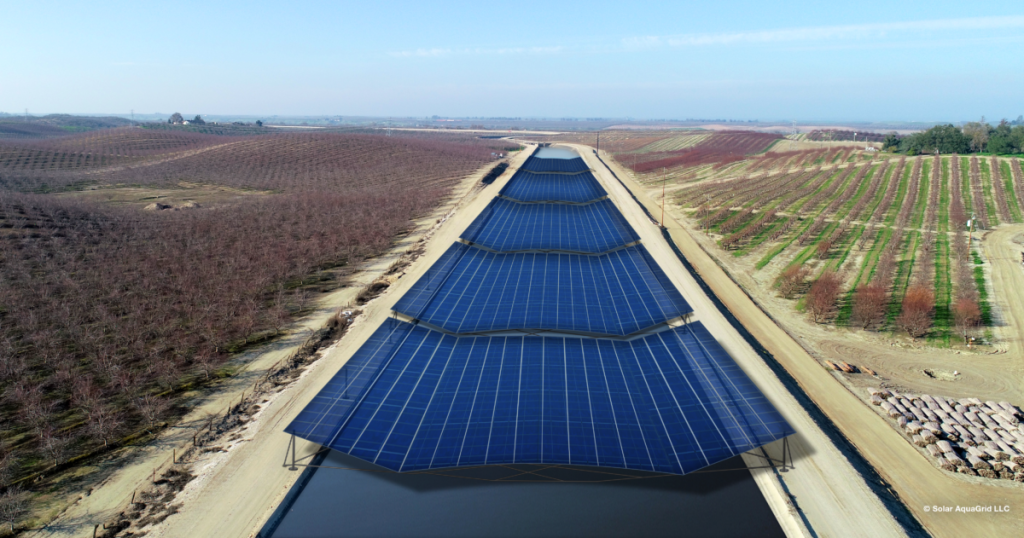
Even the energy transition is a water story. A combined-cycle gas turbine uses roughly 1 200 liters per MWh for cooling, according to the Energy Information Administration; utility-scale solar PV cuts that to 30 liters, mostly for panel washing. Investors cheering the Inflation Reduction Act’s $369 bn clean-energy package rarely price the second-order benefit: drought-prone states such as Arizona now grant expedited permits for solar farms that commit to dry-cooling, shaving 18 months off development timelines. First Solar’s 3.5 GW expansion in the Southwest cited water savings as a permitting advantage; the stock trades at 22× 2025 EBITDA, a 35 % premium to European peers that face water-use restrictions in Spain and Italy. The takeaway: in arid jurisdictions, low-carbon technology is also low-water technology, and the market is starting to pay for both attributes in the same multiple.
Green Bond Market Feels the Dust
Climate Bonds Initiative data show U.S. labeled issuance hit $115 bn in the first half, but the fastest-growing sub-category is “sustainable water infrastructure,” up 48 % year-on-year. Last week the Metropolitan Water District of Southern California sold $1.2 bn of green munis with a 4.0 % 30-yr yield, 12 bp through its own generic curve. Order books were 5× oversubscribed, driven by ESG funds that must deploy proceeds within 90 days. The rush is rational: EPA estimates that $625 bn of water-investment is needed nationwide by 2040, and municipalities are racing to lock in subsidies before the 2025 expiration of the Recovery Act’s Build America provisions. Investors, meanwhile, gain an asset that carries a scarcity premium and is callable only at par—effectively a drought-linked put option.
Boardrooms Add Water Committees
Governance metrics are catching up. In May, Costco’s shareholder meeting approved a proposal requiring the board to produce an annual “water-stewardship report,” reversing management’s earlier opposition. ISS recommended in favor after CalPERS threatened to withhold votes from all directors. Costco’s water intensity sits 22 % above the sector median, according to CDP, exposing it to cotton-field shortages in India that feed its private-label apparel. The stock fell 2 % on the news, then recovered when analysts noted the disclosure gap was already priced in. The episode illustrates how governance is becoming the transmission belt between environmental risk and valuation: boards that pre-empt water scrutiny trade at higher multiples; those that wait face activist-driven discounts. MSCI now assigns a 0.15× P/E uplift for companies with board-level water oversight, a factor that will expand as SEC climate-disclosure rules finalize later this year.
Institutional Flows: From Fossil Beta to H2O Alpha
EPFR Global tracks $8.4 bn of net inflows into U.S. ESG equity funds this year, but the composition has flipped. Energy-sector weightings inside large-cap ESG mandates have fallen to 1.9 % from 4.7 % in 2022, while utilities with renewable-heavy, low-water portfolios now command a 14 % allocation. The rotation is visible in factor performance: a Goldman Sachs basket of “low water-risk” U.S. equities has outperformed the S&P 500 by 520 bp year-to-date, while a parallel “high water-risk” basket—heavy on oil sands, coal and irrigated cash crops—has lagged by 310 bp. CNBC quotes one Midwest pension chief investment officer: “We’re treating water data like we treated Scope 1 emissions five years ago—nice to have, until the regulator makes it must-have.” The inference is that the next wave of ESG inflows will be conditioned on water KPIs, not just carbon, accelerating the divergence already visible in farmland REITs and green bonds.
Valuation: When the Aquifer Is the Moat
Traditional discounted-cash-flow models assume terminal growth of 3–4 %, but analysts at Barclays have begun to haircut food-retail and beverage names by 50 bp if operations overlap stressed aquifers such as the Ogallala, where water tables decline 0.6 meters annually. The adjustment slices 8 % off target prices for companies like Tyson Foods and J.M. Smucker, both of which count Nebraska counties as key processing hubs. Conversely, firms that disclose third-party aquifer-recharge projects receive a 25 bp uplift, equivalent to a 4 % valuation bump at today’s cost of equity. The market is therefore creating an aquifer-linked discount rate in real time, even without formal SEC guidance. Once those adjustments migrate from sell-side notes to index methodologies, passive flows will amplify the spread, rewarding companies that treat groundwater as balance-sheet inventory rather than an externality.
Risk: Policy Can Dry Up as Fast as Rain
The bullish case for water-linked assets rests on durable policy, yet the same election cycle that extended ethanol mandates could unwind them. A 2025 change in Senate control might cap water-right transfers or restrict foreign ownership of farmland, a move that would instantly mark down REIT NAVs. Meanwhile, the Supreme Court’s recent narrowing of EPA wetlands jurisdiction adds regulatory noise: developers can now drain certain parcels without federal permit, potentially increasing local flood risk and, paradoxically, raising insurance premiums for adjacent farms. Investors long farmland for its inflation protection must therefore price political beta alongside rainfall beta. The synthetic way to hedge is through green municipal bonds whose coupon is backed by tax revenues, not crop yields, offering a lower-volatility expression of the same water-scarcity theme.
Bottom Line: Follow the Water, Not the Headlines
Equity markets remain headline-driven, but the headline that matters is increasingly hidden in aquifer-depth spreadsheets and irrigation-flow datasets. Drought is no longer a weather story; it is a capital-allocation story. Farmland REITs, sustainable-water bonds, low-water-use solar arrays and board-level water committees are all mechanisms through which the market is internalizing a resource that, until now, was free. The S&P 500 may crawl, yet assets with embedded water optionality are sprinting. The risk-adjusted opportunity lies in identifying the next sector where water intensity is high, disclosure is low, and regulation is imminent—then watching the liquidity arrive.
For a deeper data kit on water-adjusted valuation models and upcoming SEC disclosure timelines, see the extended ESG dashboard here: Join Us