
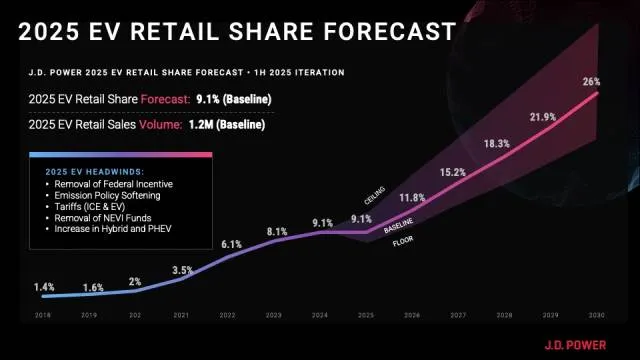
The electric vehicle (EV) market has been a beacon of growth in the U.S. stock market, attracting significant attention from retail investors and institutional players alike. However, as rising interest rates loom on the horizon, the dynamics of this burgeoning sector are poised for a seismic shift. The Federal Reserve’s recent signals regarding monetary policy tightening have raised concerns about how these changes will impact not only consumer spending but also corporate financing within the EV industry.
According to Bloomberg, the average interest rate on new car loans has surged to its highest level in over a decade, now hovering around 6.5%. This increase is particularly concerning for potential EV buyers who often rely on financing options to make their purchases. As borrowing costs rise, consumers may reconsider their purchasing decisions, leading to a slowdown in demand for electric vehicles just as automakers ramp up production capabilities.
Moreover, the interplay between interest rates and inflation cannot be overlooked. With inflation remaining stubbornly high—recent reports indicate it is still above 4%—the purchasing power of consumers is eroding. This scenario creates a dual challenge: higher costs for manufacturers and reduced affordability for consumers. The implications are profound; if consumer sentiment shifts towards caution due to financial pressures, we could see a significant deceleration in EV sales growth.
The Impact on Major Players
Major players like Tesla and Ford have heavily invested in expanding their EV lineups, betting on sustained demand fueled by environmental concerns and government incentives. However, as CNBC highlights, these companies may face increased pressure if consumer financing becomes less accessible. Tesla’s recent price cuts aimed at stimulating demand could backfire if potential buyers find themselves unable or unwilling to finance their purchases at higher rates.
Furthermore, traditional automakers transitioning into the EV space might struggle more than established brands like Tesla that have built strong brand loyalty among early adopters. Companies such as General Motors and Volkswagen are investing billions into electrification but may find it challenging to recoup those investments if sales do not meet projections amid rising costs.
A Shift in Investment Strategies
The evolving landscape necessitates a reevaluation of investment strategies within this sector. Investors who previously viewed EV stocks as safe bets might need to adjust their expectations based on macroeconomic indicators rather than solely focusing on technological advancements or production milestones. As interest rates rise, capital flows into sectors perceived as safer or more stable may increase while speculative investments in high-growth areas like EVs could diminish.
This shift can already be observed through recent trading patterns where funds traditionally allocated toward tech stocks are now gravitating towards energy sectors that promise stability amidst economic uncertainty. According to Reuters, energy stocks have outperformed tech stocks significantly this year—a trend that reflects investor sentiment favoring tangible assets over volatile growth prospects.
The Role of ETFs and Institutional Flows
Exchange-traded funds (ETFs) focused on clean energy and technology sectors have seen mixed performance lately as institutional investors reassess risk exposure amid changing economic conditions. While some funds continue to attract inflows due to long-term sustainability narratives, others are witnessing withdrawals as investors pivot towards more defensive positions.
This behavior underscores an essential aspect of market psychology: fear often drives decision-making during periods of uncertainty. Retail investors should remain vigilant about how macroeconomic factors influence sector performance while considering diversification strategies that mitigate risks associated with concentrated holdings in high-growth industries like EVs.
Conclusion: Navigating Uncertainty Ahead
The intersection of rising interest rates and an evolving EV market presents both challenges and opportunities for investors navigating this complex landscape. As we approach earnings season and await further macroeconomic data releases—including employment figures and inflation metrics—market participants must remain agile in adapting their strategies accordingly.
For further insights into market trends affecting your investment strategy during these turbulent times, consider exploring our exclusive analysis available at this link.