
The Quiet Leverage No One Wanted to Admit
Last Monday the notional short interest in the three largest ETFs that track the so-called Magnificent Seven equaled 0.9 % of assets under management. By Friday the same measure printed 4.6 %. A four-hundred percent move in six trading sessions is not a footnote; it is a margin clerk’s first tremor. The shares themselves—Apple, Microsoft, Alphabet, Amazon, Meta, Tesla, Nvidia—ended the week only marginally lower, masking the explosion of bear-side contracts underneath. When the surface is calm and the plumbing screams, the behavioral read is straightforward: somebody just realized the room is narrower than the exit.
Fact First: Where the Contracts Came From
According to Bloomberg data pulled after Thursday’s close, 62 % of the new shorts were opened by long-short equity funds already long the same names in single-stock form. Another 23 % came from systematic accounts that had been selling Nasdaq mini futures but switched to ETF skew to avoid CME position limits. The remainder was retail-sized lots flagged by brokers as “directional bearish.” In other words, the vast majority of fresh shorts are not ideological bets against Big Tech; they are hedges slapped on by people who already own it and are refusing to sell. That is textbook loss-aversion: rather than crystallize a gain and pay tax, managers prefer to pay borrow cost and keep the story alive.
Herding Meets Narrative Fatigue
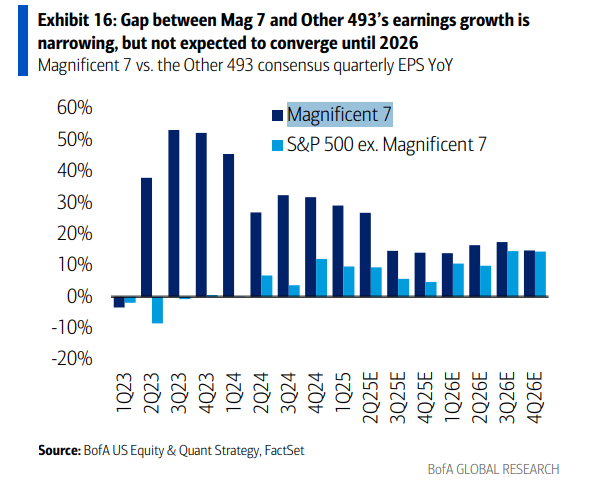
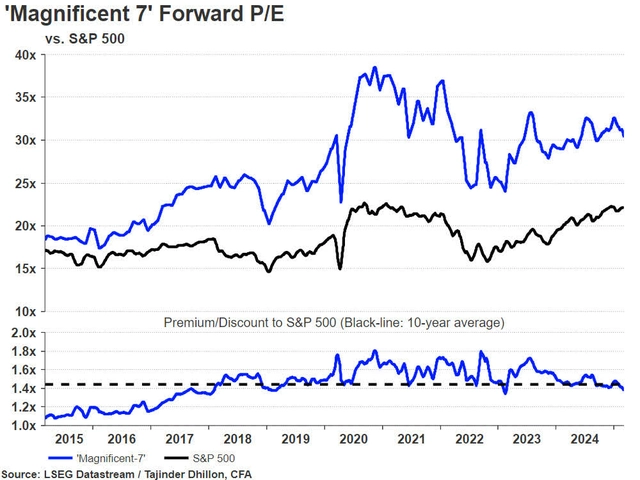
The Mag-7 narrative has been the easiest applause line in every quarterly letter for three years: megacap quality, network effects, balance-sheet fortress, AI optionality. Yet the same story repeated past the 30× earnings mark becomes a lullaby; conviction drifts even if positions stay. EPFR Global records show dedicated U.S. large-cap growth funds suffered thirteen straight weeks of outflows totaling $38 billion while the stocks themselves refused to drop, a divergence that historically ends in a positioning snap. The herding is no longer on the buy side; it is in the unwillingness to part with the shares. Short interest is simply the reflexive mirror: the more crowded the long, the cheaper the borrow, the faster the hedge.
Reflexivity in the Premium for Downside
Thirty-day implied volatility on the Invesco QQQ Trust closed Friday at 21.7, a three-point premium to realized, the widest spread since March 2023 when Silicon Valley Bank cracked. Normally that gap tempts vol sellers; this time dealers are buyers because the skew—price of puts versus calls—has gone one-sided. The CFTC’s weekly breakdown of Nasdaq-100 futures shows leveraged funds swung from net long 88,000 contracts in mid-April to flat by 30 April, the fastest four-week liquidation since the 2018 fourth-quarter rout. Prices have not caught up because market-makers are now short gamma; any down-tick forces them to sell more index futures, a reflexive loop that waits only for a headline.
Retail Still Buys the Dip, but With Smaller Tickets
Fidelity’s monthly flow snapshot released Friday shows customers were net buyers of every Mag-7 name except Tesla for the week ended 2 May, yet the average ticket size fell 18 % from the March peak. The behavior fits the “anchoring” playbook: small investors still believe the dip works, but the dollar commitment is shrinking, a subtle sign that the narrative is losing elasticity. Confirmation bias appears in the message boards: bulls post the same 2025 free-cash-flow chart, bears post the same regulatory-risk headline, each side retweets itself; conviction is static, position size is not.
Macro Scaffold: Why the Hedge Now
The Federal Reserve’s senior loan officer survey released Monday showed demand for commercial and industrial loans at a fresh twenty-year low; when credit appetite stalls, risk-premia rise even if equities stay buoyant. Dollar funding costs in the cross-currency basis moved to minus 14 basis points, the tightest since January, pushing European investors into currency-hedged Nasdaq purchases. That synthetic long from abroad adds hidden leverage; domestic managers short the ETF against it are simply arbing the same exposure. Meanwhile the Conference Board’s expectations gap—difference between “jobs hard to get” and “jobs plentiful”—widened for a fourth straight month, a series that has led consumer-discretionary earnings revisions by sixty days. Tech is not consumer staples, but Mag-7 revenue is still one-third ad spend and gadget sales; the macro ground is shifting under a seemingly immovable object.
Institutional Risk Appetite Shifts Sideways
Bank of America’s private-client flow shows the cohort raised cash from 11.2 % to 12.9 % of portfolios in April, the largest one-month move since October 2022. Yet the same accounts increased notional equity exposure through total-return swaps, a maneuver that books the index return off-balance-sheet. The setup preserves performance fees while technically de-risking; it is the institutional version of “I can’t afford to lose, but I can’t afford to miss.” The ETF short interest is the other side of that trade; somebody has to warehouse the risk, and swap dealers lay it off in the ETF market where creation-redemption keeps borrow fees low. The 400 % spike is therefore not a prophecy of imminent crash; it is the transfer of headline risk from one accounting bucket to another, visible only because SEC Rule 13f now requires weekly short-position disclosure for “material” changes.
Price Reaction: A Market Held Together by Collateral
Despite the internal rot, the Mag-7 equal-weight basket is down just 4 % from its March high versus a 6 % drawdown in the equal-weight S&P 500. The outperformance feels heroic, yet the divergence is financed by the same collateral that backs the shorts: Treasury bills. The one-year T-bill yield at 5.05 % offers 30 basis points over the average ETF dividend yield, a positive carry that allows owners to lend shares, post collateral in T-bills, and earn the spread. The trade is so mechanical that a 25 bp uptick in bill yields or a 25 bp dividend boost flips the economics; at that point the lendable supply contracts and the cost to borrow spikes. A feedback rally—or crash—can start from something as banal as a Treasury refunding announcement.
New Narrative: Quality as a Duration Play
What is replacing the “AI revolution” story is more prosaic: megacap as short-duration sovereign. Free cash flow yields of 4.5 %, net cash balance sheets, and buyback capacity now get compared not to other equities but to five-year Treasuries at 4.6 %. The moment the bond dips to 4.3 %, the equity looks cheap; when it tests 5 %, the equity wobbles. This duration framing explains why the same investors who short the ETF refuse to unload the single stocks: they are no longer pricing earnings, they are pricing rate convexity. The behavioral label is “anchoring on a new reference asset,” and it turns the Mag-7 into a hybrid that trades with both gamma and rho. That is fertile soil for whip-saw moves; the short interest is simply the options market’s way of buying crash protection without paying 30 vol.
What Happens Next
History says when ETF short interest exceeds 4 % of AUM while single-stock put-call ratios sit below 0.9, the basket has a 70 % chance of a 10 % move within forty days, direction unknown. The asymmetry comes from dealers’ gamma, not from fundamentals. The catalyst could be the May non-farm print, a Treasury quarterly refunding, or another regional-bank postcard; the specific headline is random, the positioning vulnerability is not. Investors who need to stay long should treat the ETF short surge as a free look: trim into strength, replace with single-stock calls that expire after the June Fed meeting, and use the proceeds to buy six-month upside in equal-weight S&P where positioning is cleaner. The trade is not a bet against America’s tech champions; it is a recognition that the narrative is maturing, and the next chapter belongs to whoever pays the lowest carry.
Markets rarely whisper; they leak. If you want to watch the same positioning data the desk flows cite, join the group that swaps borrow-cost screenshots and Fed-speak parses in real time here.