
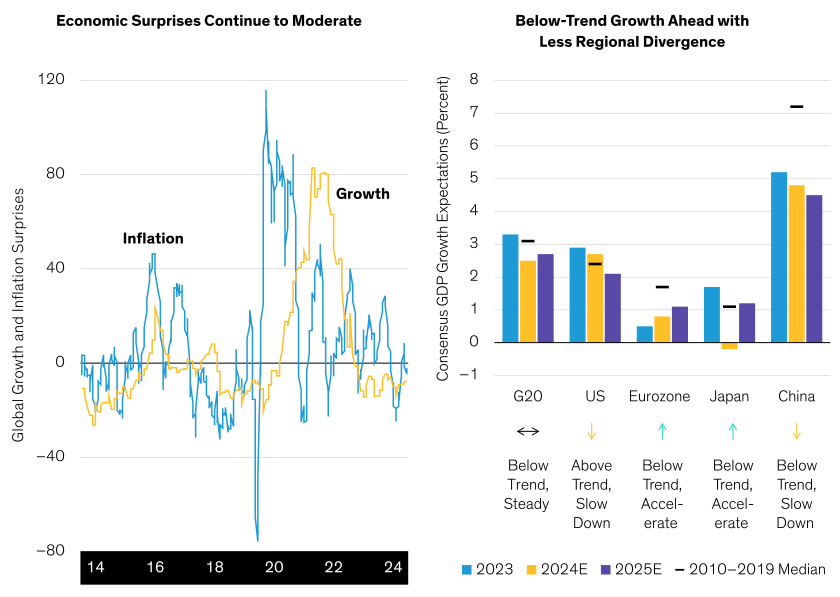
The fixed income landscape is undergoing significant transformation as we approach 2025. With the Federal Reserve’s monetary policy tightening and inflationary pressures persisting, institutional investors are reassessing their asset allocation strategies. The traditional view of bonds as a safe haven is being challenged by rising interest rates and shifting risk appetites. This analysis aims to provide insights into the evolving dynamics of fixed income markets, cross-asset pricing frameworks, and potential opportunities for portfolio optimization.
Current Market Dynamics and Risk Premiums
As of late 2023, the U.S. bond market has seen a notable divergence in yields across different maturities. Short-term rates have surged due to aggressive rate hikes by the Federal Reserve, while long-term yields remain relatively subdued. This flattening of the yield curve indicates a shift in investor sentiment towards caution amid economic uncertainty. According to Bloomberg, this environment has led to an increase in risk premiums across various asset classes, prompting institutional investors to reevaluate their duration preferences.
The current risk appetite among institutional investors reflects a cautious stance towards equities, particularly in sectors sensitive to interest rate fluctuations such as technology and consumer discretionary. As these sectors face headwinds from higher borrowing costs, defensive sectors like utilities and consumer staples are gaining traction due to their relative stability in earnings during economic downturns.
Cross-Asset Pricing Frameworks
In light of these developments, understanding cross-asset pricing becomes crucial for effective asset allocation. The interplay between equity valuations and bond yields suggests that as yields rise, equity valuations may need to adjust downward unless corporate earnings can outpace these increases. Recent reports from Reuters highlight that many analysts are revising their earnings forecasts downward for growth-oriented companies while favoring value stocks that offer attractive dividend yields amidst rising rates.
This shift underscores the importance of maintaining a diversified portfolio that balances exposure across various asset classes. Institutional managers are increasingly looking at multi-factor approaches that consider not only valuation metrics but also macroeconomic indicators such as employment data and inflation trends when making investment decisions.
Sector Rotation: Identifying Opportunities
The current market environment presents unique opportunities within sector rotation strategies. While growth sectors like AI and technology have been under pressure due to higher discount rates applied to future cash flows, cyclical industries such as energy are experiencing renewed interest driven by supply constraints and geopolitical tensions affecting oil prices.
Moreover, defensive sectors continue to attract capital as investors seek refuge from volatility. The resilience of these industries during economic slowdowns makes them appealing for those prioritizing capital preservation alongside modest returns. As noted by CNBC, funds flowing into defensive equities indicate a strategic pivot among institutional players aiming for stability over high-risk growth prospects.
Macroeconomic Considerations: Inflation and Policy Outlook
The macroeconomic backdrop remains complex with persistent inflationary pressures influencing both monetary policy decisions and investor behavior. The Federal Reserve’s commitment to controlling inflation through rate hikes will likely continue shaping market expectations through 2025. Consequently, institutions must navigate this landscape carefully—balancing between fixed income securities that may offer lower returns against equities poised for recovery once inflation stabilizes.
The interplay between employment figures and wage growth further complicates this outlook; strong labor markets could lead the Fed to maintain its hawkish stance longer than anticipated, impacting both bond prices and stock valuations adversely if not managed properly.
Navigating Fixed Income Strategies Going Forward
For institutional investors contemplating fixed income allocations moving forward, several strategies emerge as viable options amidst this evolving landscape. Emphasizing shorter-duration bonds can mitigate interest rate risk while still providing some level of yield enhancement compared to cash equivalents or ultra-short funds.
Additionally, exploring credit spreads within corporate bonds may yield attractive opportunities given the current economic climate where select issuers demonstrate robust fundamentals despite broader market challenges. A focus on high-quality credits with strong balance sheets could serve well in preserving capital while capturing incremental yield above government securities.
Conclusion: Reassessing Fixed Income’s Role
The question remains whether fixed income can retain its status as a safe haven amid changing market conditions leading into 2025. While traditional views may suggest otherwise given rising rates and inflation concerns, there exist nuanced opportunities within this space that warrant careful consideration from institutional allocators seeking balanced portfolios capable of weathering volatility without sacrificing return potential.
For deeper insights into our allocation framework, risk perspectives, and quarterly trends impacting your investment strategy moving forward, please refer to this link.