
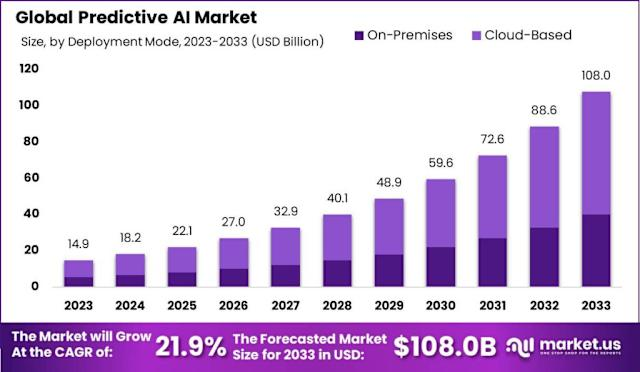
The U.S. stock market is currently navigating a landscape shaped by rapid advancements in artificial intelligence (AI) and its implications for investment strategies. As we move deeper into 2025, the intersection of AI-driven predictions and market behavior presents both opportunities and risks that investors must carefully consider.
Current Market Dynamics
As of late 2025, the macroeconomic backdrop is characterized by fluctuating inflation rates, persistent interest rate adjustments by the Federal Reserve, and a labor market that shows signs of resilience despite economic headwinds. According to recent reports from Bloomberg, inflation has stabilized around 3%, prompting the Fed to maintain a cautious approach towards further rate hikes. This environment fosters a unique setting for investment opportunities, particularly within technology sectors that are increasingly leveraging AI capabilities.
The Role of AI in Investment Strategies
AI’s growing influence on investment strategies cannot be overstated. Algorithms are now capable of analyzing vast datasets to predict market movements with unprecedented accuracy. However, this reliance on AI also introduces new volatility factors. As noted by CNBC, institutional investors are increasingly utilizing AI tools to inform trading decisions, which can lead to herd behavior during market fluctuations. This phenomenon raises questions about the sustainability of such strategies, especially when market corrections occur.
Sector Rotation and Structural Changes
The current market trend indicates a significant rotation among sectors as investors reassess their portfolios in light of emerging technologies. The tech sector, particularly AI stocks, has attracted considerable capital flows, while traditional sectors like energy face challenges due to regulatory changes and shifting consumer preferences. According to Reuters, investment in renewable energy has surged as companies pivot towards sustainable practices, yet this sector remains sensitive to geopolitical developments and policy shifts.
Investment Opportunities Amidst Uncertainty
For investors looking for stability amidst potential volatility, index funds that focus on diversified holdings can provide a buffer against abrupt market shifts. Additionally, ETFs that target specific sectors—such as AI or renewable energy—offer strategic entry points for those willing to embrace calculated risks. As highlighted by analysts at Goldman Sachs, the long-term outlook for AI-related investments remains positive despite short-term fluctuations.
Identifying Risks in an AI-Driven Market
While the prospects for growth in AI-driven investments are promising, it is essential to remain vigilant about inherent risks. Overreliance on algorithmic trading can exacerbate volatility during downturns, leading to sharp sell-offs as algorithms react swiftly to market signals. Furthermore, regulatory scrutiny over data privacy and ethical considerations surrounding AI deployment may introduce additional uncertainties.
Conclusion: Navigating the Future
The integration of AI into investment strategies marks a transformative shift in how markets operate. For mid-career professionals investing their savings with an eye toward future stability, understanding these dynamics is crucial. Balancing the pursuit of growth with risk management will be key in navigating this new era of market volatility.
As we look ahead, it is vital for investors to stay informed and adaptable. Engaging with trusted financial communities can provide valuable insights into evolving trends and investment strategies tailored to individual risk profiles.