
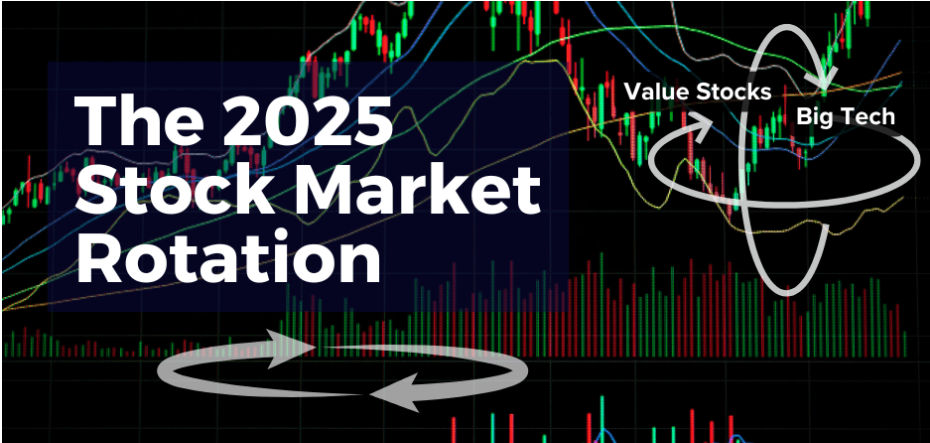
The U.S. stock market in 2025 is at a pivotal juncture, shaped by the Federal Reserve’s anticipated policy shift towards interest rate cuts in the fourth quarter. This macroeconomic backdrop is not merely a headline event but a fundamental driver reallocating capital across sectors. For investors, understanding this transition—from a high-rate environment to a potential easing cycle—is critical for positioning portfolios to capture growth while mitigating risks. The interplay between inflation data, employment figures, and corporate earnings will dictate the pace and magnitude of this shift, making it essential to monitor indicators like the Consumer Price Index (CPI) and nonfarm payrolls reports on platforms like Bloomberg.
The Fed’s Pivot and Its Market Implications
As the Fed signals a gradual move towards rate cuts, historically supportive of equity valuations, investors are reassessing asset allocations. Lower borrowing costs typically boost sectors like technology and consumer discretionary, as seen in past cycles. However, the current scenario is nuanced: persistent services inflation and a resilient labor market, as reported by Reuters, suggest that cuts may be delayed or incremental. This creates a “higher for longer” residue, where sectors overly reliant on cheap money, such as speculative growth stocks, could face volatility. Conversely, value-oriented areas like industrials and energy may benefit from sustained economic activity. Institutional flows, tracked through tools on CNBC, already show a rotation into cyclical names, anticipating a soft landing rather than a recession.
Sector Rotation: Identifying Structural Opportunities
In this environment, sector rotation is accelerating. Technology stocks, particularly AI-focused companies, remain a core holding due to their innovation-driven growth. For instance, semiconductor firms involved in AI infrastructure have outperformed, with earnings surprises fueling rallies. Yet, diversification is key—energy sector investments offer a hedge against geopolitical tensions and supply constraints, while financials may rebound as yield curves steepen. According to analysis from Nasdaq, ETFs tracking these themes, such as those focused on clean energy or cybersecurity, are attracting inflows. This aligns with a broader trend where investors use index funds for broad exposure while tilting towards high-conviction themes. Data from Yahoo Finance highlights that sectors like healthcare, with demographic tailwinds, are gaining attention for their defensive growth characteristics.
Practical Strategies for Portfolio Allocation
For investors, a balanced approach is paramount. Consider a core-satellite strategy: anchor portfolios with low-cost index funds like the S&P 500 ETF (SPY) for stability, and allocate satellites to thematic ETFs or individual stocks in emerging areas. For example, AI stocks have demonstrated resilience, but valuation metrics on TradingView suggest selectivity is crucial—focus on companies with solid cash flows and competitive moats. Meanwhile, fixed income, often overlooked, could become attractive as rates peak, with corporate bonds offering yield opportunities. Tools from Morningstar can help assess risk-adjusted returns. Ultimately, the goal is to align allocations with personal risk tolerance and time horizon, avoiding emotional reactions to short-term volatility.
As markets evolve in response to the Fed’s actions, staying informed through reliable sources and maintaining a disciplined investment framework will be essential. The current landscape offers a mosaic of opportunities—from tech innovation to energy transitions—that reward strategic foresight over impulsive moves. This could be the moment to rebalance towards sectors poised for the next phase of economic growth.
Join our exclusive investor community to gain real-time insights and strategies for navigating market shifts. With limited spots available, you’ll access expert analysis and a supportive network—don’t miss out on maximizing your portfolio potential. Click here to secure your place now.