
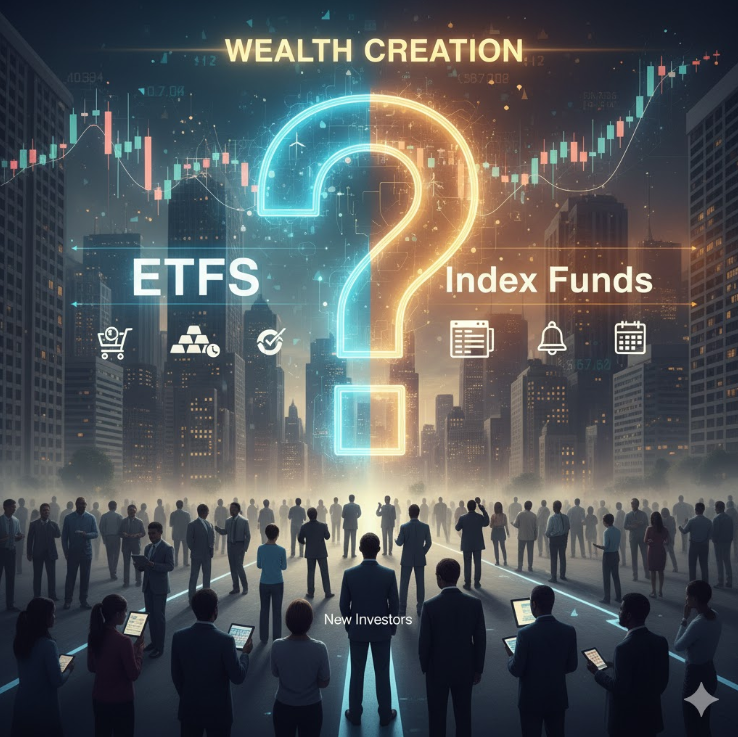
As new investors transition from basic financial management to actual investment strategies, understanding the tools available in the U.S. stock market is crucial. Among these tools, Exchange-Traded Funds (ETFs) and Index Funds stand out as popular choices for those looking to build wealth. But which one should you choose? This article will help you navigate these options and uncover potential investment opportunities.
The Basics: What Are ETFs and Index Funds?
ETFs are investment funds that trade on stock exchanges, much like individual stocks. They typically track an index, commodity, or a basket of assets and can be bought and sold throughout the trading day. On the other hand, Index Funds are mutual funds designed to replicate the performance of a specific index, such as the S&P 500. They are only traded once a day after the market closes.
Key Differences: Costs and Flexibility
One of the most significant advantages of ETFs is their lower expense ratios compared to traditional Index Funds. According to Bloomberg, the average expense ratio for an ETF is around 0.44%, while for Index Funds it can be higher, making ETFs a more cost-effective option for many investors. Additionally, ETFs offer greater flexibility, allowing investors to buy and sell shares anytime during market hours, which can be advantageous in a volatile market.
Market Trends: Institutional Flows Favoring ETFs
Recent trends indicate a growing preference among institutional investors for ETFs over Index Funds. Data from Reuters shows that over $500 billion flowed into U.S. ETFs in 2023 alone. This trend suggests that ETFs are not just a fad; they are becoming a core component of investment portfolios, indicating strong market confidence.
Investment Opportunities: Where Should You Look?
For new investors, identifying sectors that are poised for growth is essential. The technology sector, particularly AI stocks, has shown remarkable resilience and innovation potential. Additionally, energy sector investments are gaining traction as renewable energy sources become more mainstream. As an investor, diversifying your portfolio with a mix of ETFs and Index Funds can provide exposure to these growth areas while managing risk effectively.
Conclusion: Are You Ready to Invest?
The decision between ETFs and Index Funds ultimately depends on your investment goals, risk tolerance, and trading style. By understanding the differences and staying informed about market trends, you can position yourself to seize wealth creation opportunities as they arise. This might just be the beginning of your journey into the world of investments—don’t miss out on what could be the next big trend!
Join our exclusive investment community today and gain insights into the next trends that could shape your financial future! Don’t miss out on valuable discussions—be part of our journey by clicking here: Join Now!